
 By
By By Khurram Shehzad | Sports Correspondent
AICHI-NAGOYA, Japan — Pakistan’s journey at the 20th Asian Games has ended with a mixed sporting report card: 10 medals, two silver and eight bronze, but no gold. The results offered moments of national pride while raising difficult questions about the country’s preparations, sporting infrastructure and ambitions to compete with Asia’s leading nations.
Pakistan finished 29th in the final medal standings, improving by two positions compared with the previous Asian Games in Hangzhou. Yet the absence of a gold medal remains a significant concern for a country with a rich sporting history and generations of talented athletes.
The campaign demonstrated that Pakistan can still challenge established opponents in selected disciplines. However, turning occasional success into consistent championship-winning performances remains the central challenge for the country’s sporting authorities.
Cricket and squash lead Pakistan’s medal campaign
Pakistan’s two silver medals came from men’s cricket and men’s team squash, two competitions that offered genuine opportunities to finish at the top of the podium.
In cricket, Pakistan reached the final against arch-rivals India after defeating Bangladesh in the semifinals. The team ultimately lost the gold-medal match by 19 runs on October 3.
India scored 211 for six in their 20 overs, setting Pakistan a demanding target. Hasan Nawaz produced a remarkable innings of 96 from 51 balls, keeping Pakistan in contention, but the team finished on 192 for six.
Although the final ended in disappointment, the performance demonstrated Pakistan’s capacity to compete in a high-pressure international contest. The narrow margin also illustrated how individual brilliance can bring a team close to victory without necessarily securing the championship.
Squash provided another major highlight. Pakistan won silver in the men’s team event after losing 2–0 to Malaysia in the final. Noor Zaman and Ashab Irfan also collected bronze medals in the men’s individual competition, bringing Pakistan’s squash total to three.
For a nation historically associated with squash excellence, the results offered encouragement while reinforcing the need to develop a stronger pipeline of emerging players and maintain regular international competition.
Hockey’s return to the podium brings hope
One of Pakistan’s most emotionally significant achievements came in men’s field hockey.
Pakistan defeated South Korea 5–3 in the bronze-medal match on October 3, ending a 12-year wait for an Asian Games hockey medal.
The contest required determination and an impressive recovery. After South Korea established an advantage, Pakistan fought back through goals from Abdul Rehman, Rana Waheed and Hannan Shahid, alongside an early strike from Sufyan Khan.
The victory was more than a bronze medal. It represented an encouraging moment for a sport that once placed Pakistan among the leading forces in international hockey.
However, one successful tournament cannot resolve the structural problems that have affected Pakistani hockey over recent years. Continued investment in domestic competitions, coaching, fitness, player development and international exposure will be necessary if the team is to challenge consistently for Asian titles.
Women athletes make their contribution
Pakistan’s women’s cricket team secured bronze after defeating Bangladesh by 31 runs. The result added another podium finish and highlighted the contribution of women athletes to the national campaign.
Supporting women’s sport requires more than celebrating medals. Access to quality facilities, professional coaching, competitive domestic leagues and sustained financial support is essential to creating opportunities for athletes to progress to the international level.
Pakistan’s performance in women’s cricket should therefore be viewed as both an achievement and an opportunity to strengthen the broader sporting structure.
Esports, shooting and other disciplines expand the medal base
Pakistan’s eight bronze medals included achievements across several disciplines beyond its traditional sporting strengths.
The country won bronze in PUBG Mobile esports, while Asim Khan secured a medal in mixed martial arts. Ghulam Mustafa Bashir added a bronze in the men’s 25-metre rapid-fire pistol shooting event, and Pakistan’s men’s volleyball team defeated China 3–0 to claim bronze.
These results demonstrated the importance of developing athletes across a wider range of sports rather than relying on a small number of established disciplines.
The medal-winning performances also showed why talent identification, specialist coaching and targeted preparation matter. Countries seeking sustained success at multi-sport competitions need competitive programmes across numerous events, not merely isolated achievements from individual athletes.
The missing gold medal: Pakistan’s biggest concern
The central question following Aichi-Nagoya is straightforward: why could Pakistan win 10 medals but fail to secure a single gold?
The answer cannot be reduced to one match, one athlete or one federation. Success at the Asian Games depends on years of preparation, technical expertise, physical conditioning, funding, competition experience and effective sports administration.
Pakistan’s two silver medals demonstrate that its athletes reached the highest levels of competition in their respective events. The challenge is converting those final-stage appearances into victories.
A serious review should examine how athletes are selected, how national training camps are organised, whether coaching programmes meet international standards and whether sports federations have clear performance targets.
Equally important is the need to support athletes consistently between major competitions. Preparation should not begin only when the next Asian Games or another international tournament approaches.
What Pakistan must do before the next Asian Games
The results from Aichi-Nagoya should become the starting point for a structured review rather than the subject of a short-lived celebration or criticism.
First, Pakistan needs stronger grassroots development programmes that identify promising athletes early and provide them with pathways to elite competition.
Second, national federations should establish measurable targets, transparent selection procedures and long-term development plans. Funding should be connected to credible preparation and athlete-support programmes.
Third, sports science, nutrition, injury prevention and access to qualified coaches must become central elements of preparation. Modern international competition increasingly rewards athletes who benefit from comprehensive support systems.
Finally, Pakistan needs greater participation in international tournaments before major championships. Regular competition helps athletes understand the pace, technical demands and psychological pressures of facing the strongest opponents.
These measures will require cooperation between the government, sports federations, educational institutions, sponsors and private-sector organisations.
A verdict of hope, but not complacency
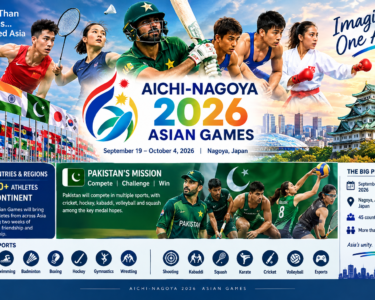
Pakistan’s campaign at the 20th Asian Games Aichi-Nagoya 2026 produced 10 medals and several memorable performances. The silver medals in cricket and squash, hockey’s return to the podium and bronze-medal achievements across other disciplines provided reasons for encouragement.
Nevertheless, the lack of a gold medal and the 29th-place finish show that Pakistan still faces a substantial challenge in translating sporting potential into sustained success.
The country has athletes capable of competing against Asia’s best. What remains essential is a system that consistently identifies talent, prepares competitors professionally and gives them the resources to succeed.
For Pakistan, Aichi-Nagoya should be remembered neither as a complete failure nor as a campaign that requires no further scrutiny. It should be a turning point for serious planning, accountability and investment.
The real measure of progress will come at the next major championship: whether Pakistan can move beyond silver and bronze, compete for gold more regularly and rebuild its place among Asia’s leading sporting nations.
Khurram Shehzad
Sports Correspondent | Sportsnaama